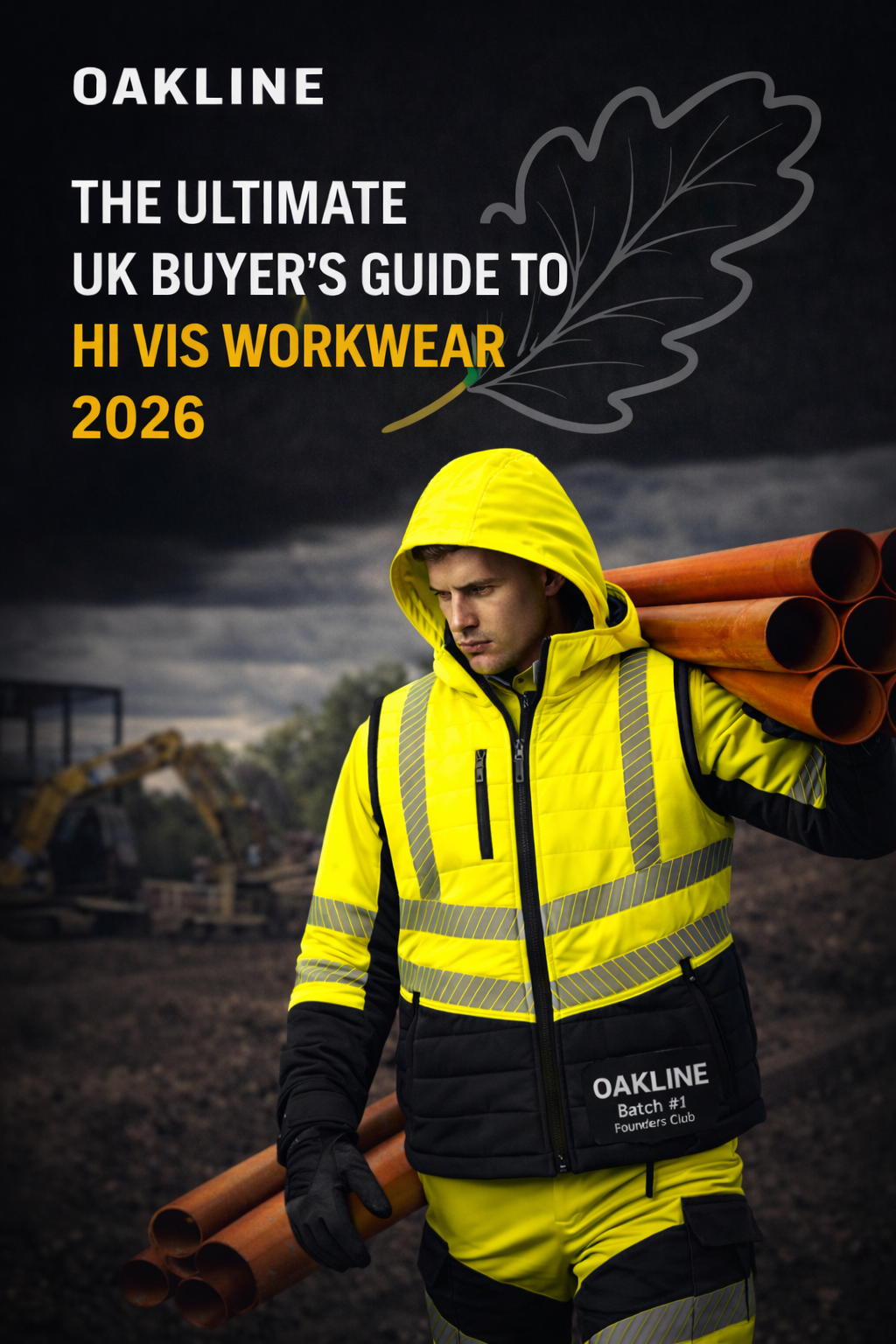
Hi vis workwear is one of the most widely used forms of personal protective equipment in the UK. It is also one of the most misunderstood.
Many businesses still buy hi vis based on habit, price, or what they have always ordered, without fully understanding how visibility, comfort, durability, and suitability for different environments actually work together.
This guide is written to give UK buyers, site managers, and business owners a clear and practical understanding of hi vis workwear in 2026. No sales talk. No jargon. Just informed guidance based on how hi vis is actually used on site.
At OAKLINE, we understand that hi vis workwear decisions are rarely made in isolation. Over years of working alongside UK site managers, safety teams, and contractors, it has become clear that visibility, comfort, and durability all influence whether garments are worn correctly or worn at all. That experience shapes how modern hi vis workwear should be viewed today.
What Hi Vis Workwear Is Really For
The primary purpose of hi vis workwear is simple. It exists to make the wearer visible in environments where there is a risk from vehicles, machinery, or low visibility conditions.
For hi vis to be effective, it must work in multiple situations. It must be visible in daylight. It must be effective in low light. It must perform in poor weather. It must remain effective when the wearer is moving. And it must be recognisable from multiple angles.
Hi vis is not just about colour. It is the combination of fluorescent fabric and reflective material, correctly positioned on the body, that delivers effective visibility.
Understanding Hi Vis Colours Yellow and Orange
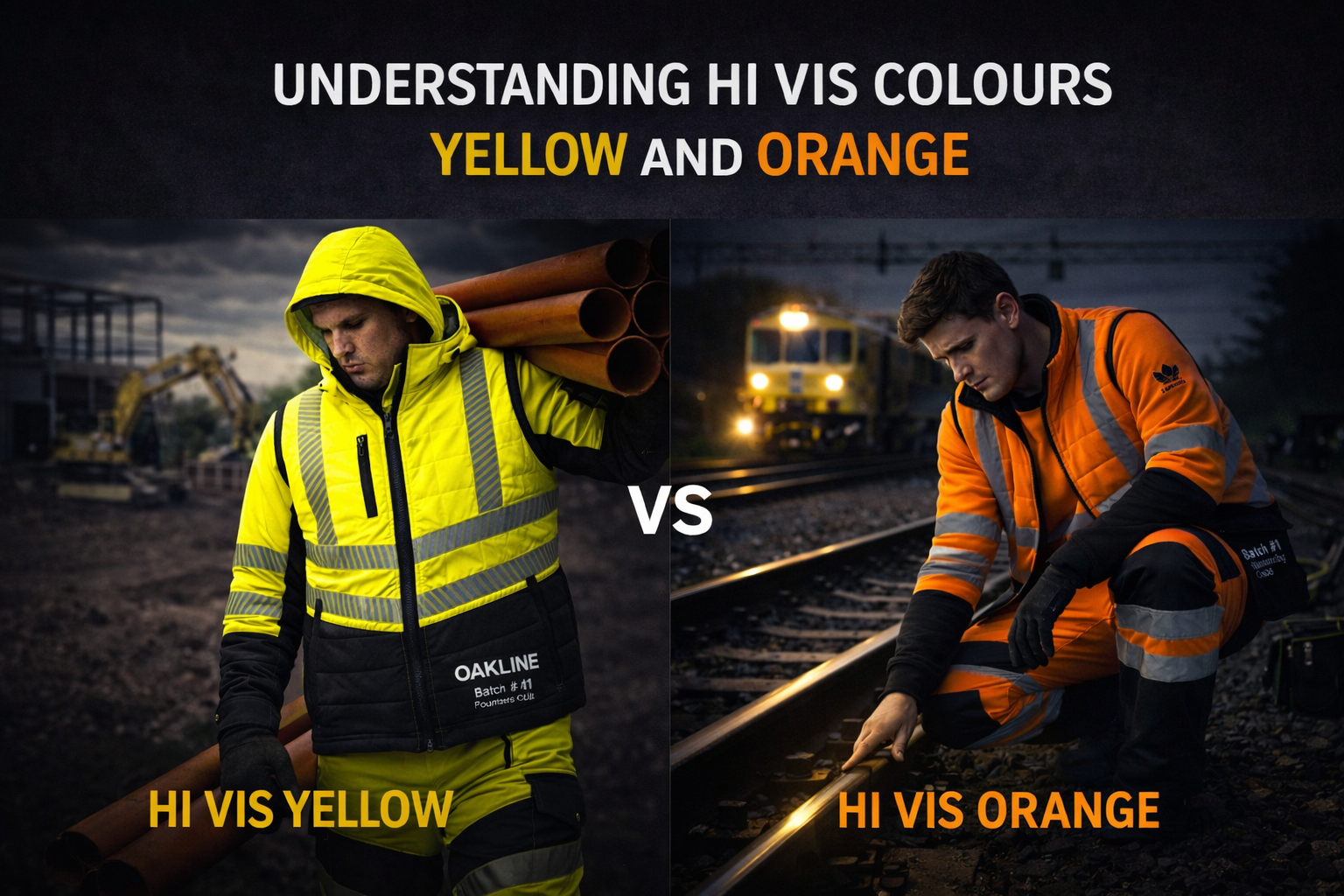
Hi Vis Yellow
Hi vis yellow is most commonly used across construction sites, civils and utilities, warehousing, logistics, and general site environments. It performs well in daylight and urban settings, offering strong contrast against natural and built backgrounds.
For many environments, hi vis yellow provides the right balance of visibility and practicality.
Hi Vis Orange
Hi vis orange is typically used in rail environments, roadside work, highways, and high risk traffic zones. The colour offers strong contrast against ballast, asphalt, and rail infrastructure, particularly in lower light conditions.
Colour choice should always be based on environment and risk, not preference.
Reflective Tape Matters More Than Most People Think
Reflective material is what allows hi vis workwear to function when light levels drop.
Modern hi vis garments rely on silver retro reflective tape to reflect light back toward its source. When positioned correctly, this tape helps drivers and machine operators recognise the human shape at distance.
Layout is critical. Poorly positioned tape can reduce visibility even if a garment technically meets a standard. Increasingly, segmented reflective tape is used to improve flexibility and wearer comfort, particularly on active garments.
OAKLINE understands that reflective tape only works if the garment itself is comfortable enough to be worn properly throughout the shift.
Hi Vis Standards Explained Simply
Most UK hi vis workwear is designed around EN ISO 20471. This standard defines minimum requirements for visibility.
In simple terms, Class 1 offers the lowest level of visibility and is often associated with trousers. Class 2 provides a medium level of visibility and is commonly seen in vests and T shirts. Class 3 delivers the highest level of visibility and is typically associated with jackets and coats.
Higher classes usually mean more visible surface area and more reflective material. The correct class depends on risk level and environment, not just compliance alone.
Fit Comfort and Movement Are Critical
One of the biggest changes in hi vis workwear over the past decade is expectation.
Wearers now expect garments that fit properly, allow freedom of movement, remain breathable across long shifts, and feel comfortable enough to wear all day.
OAKLINE understands that comfort is not optional. When garments restrict movement, overheat the wearer, or feel bulky, they are more likely to be worn incorrectly or removed altogether. That undermines the purpose of hi vis entirely.
Modern hi vis design increasingly mirrors everyday workwear silhouettes, helping garments feel like clothing rather than restrictive PPE.
Layering Is the Smarter Way to Wear Hi Vis
In the UK, weather conditions change constantly. One heavy garment rarely works year round.
A layered approach allows wearers to adapt to temperature changes while maintaining visibility at all times. It also reduces the likelihood of garments being removed due to overheating.
From experience, OAKLINE has found that layering is one of the most overlooked aspects of hi vis workwear. Issuing a single heavy garment often leads to discomfort, inconsistent wear, and unnecessary replacement costs.
A practical layered setup usually includes a base layer, a mid layer, and an outer layer that can be added or removed as conditions change.
Durability Washing and the True Cost of Hi Vis
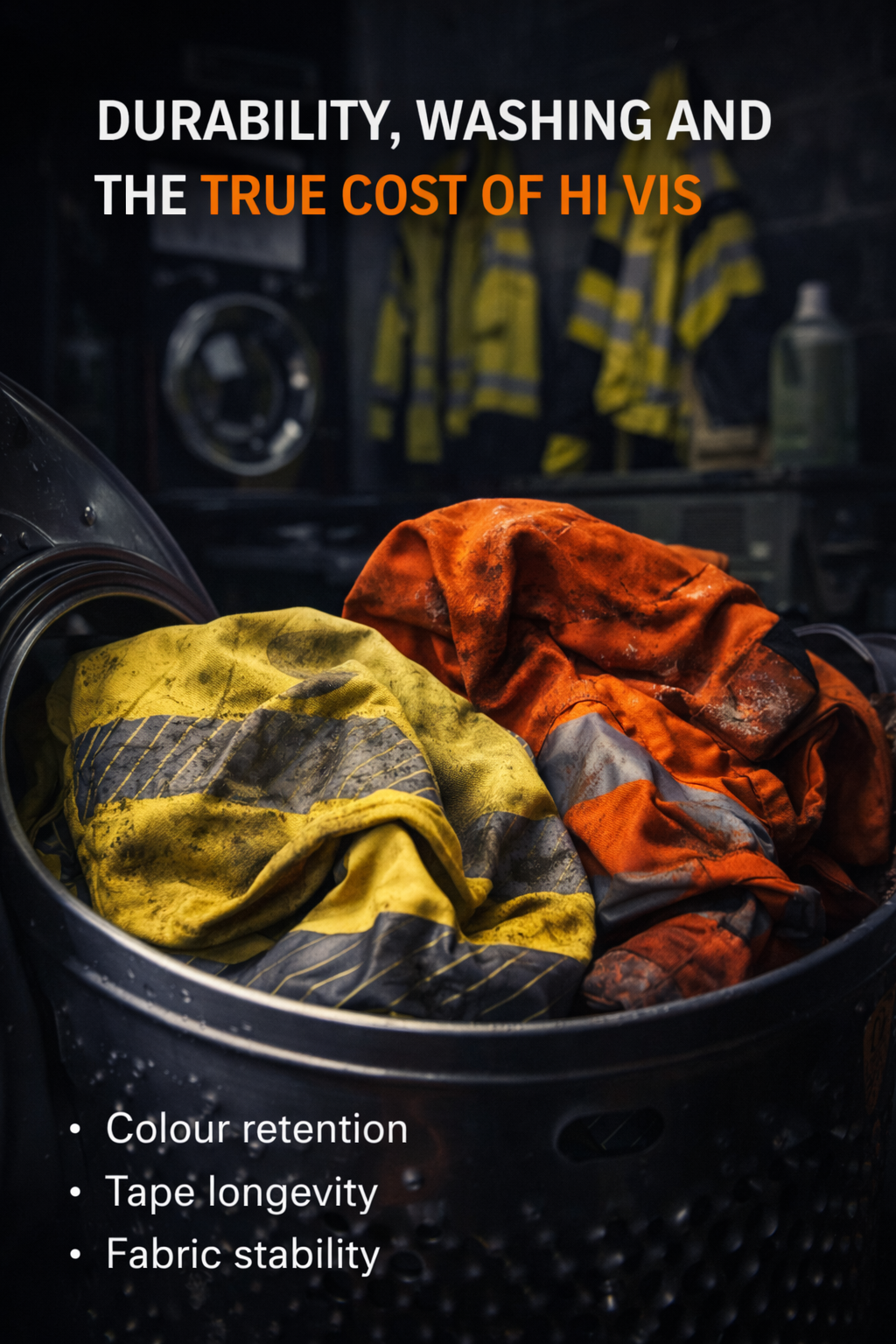
Hi vis workwear is often washed more frequently than standard clothing. This makes durability critical.
Buyers should consider how well colours hold up over time, whether reflective tape maintains performance, how fabrics respond to repeated washing, and whether garments retain their shape.
OAKLINE understands that durability is often judged too late, after garments have already failed. In reality, colour retention, tape longevity, and fabric stability have a greater impact on long term cost than the initial purchase price.
Common Mistakes Buyers Still Make
Despite better information being available, several mistakes remain common.
Some buyers purchase individual garments rather than thinking about full outfits. Others mix colours and styles across teams, creating inconsistency on site. Price is often prioritised over suitability. Comfort and fit are overlooked. In some cases, garments are over specified or under specified for the actual environment.
Each of these mistakes leads to inefficiency, inconsistency, or unnecessary cost over time.
What to Look for in Hi Vis Workwear in 2026
The most effective hi vis workwear today balances visibility, comfort, durability, fit, and suitability for the environment. It also allows for consistency and ease of replacement.
Increasingly, businesses are moving away from ad hoc garment purchasing and toward more structured approaches that simplify decision making and improve uniformity across teams.
From OAKLINE’s perspective, the future of hi vis workwear lies in better understanding rather than louder marketing. When buyers understand how colour, fit, layout, layering, and durability work together, they make safer and more consistent decisions that benefit both the workforce and the business long term.