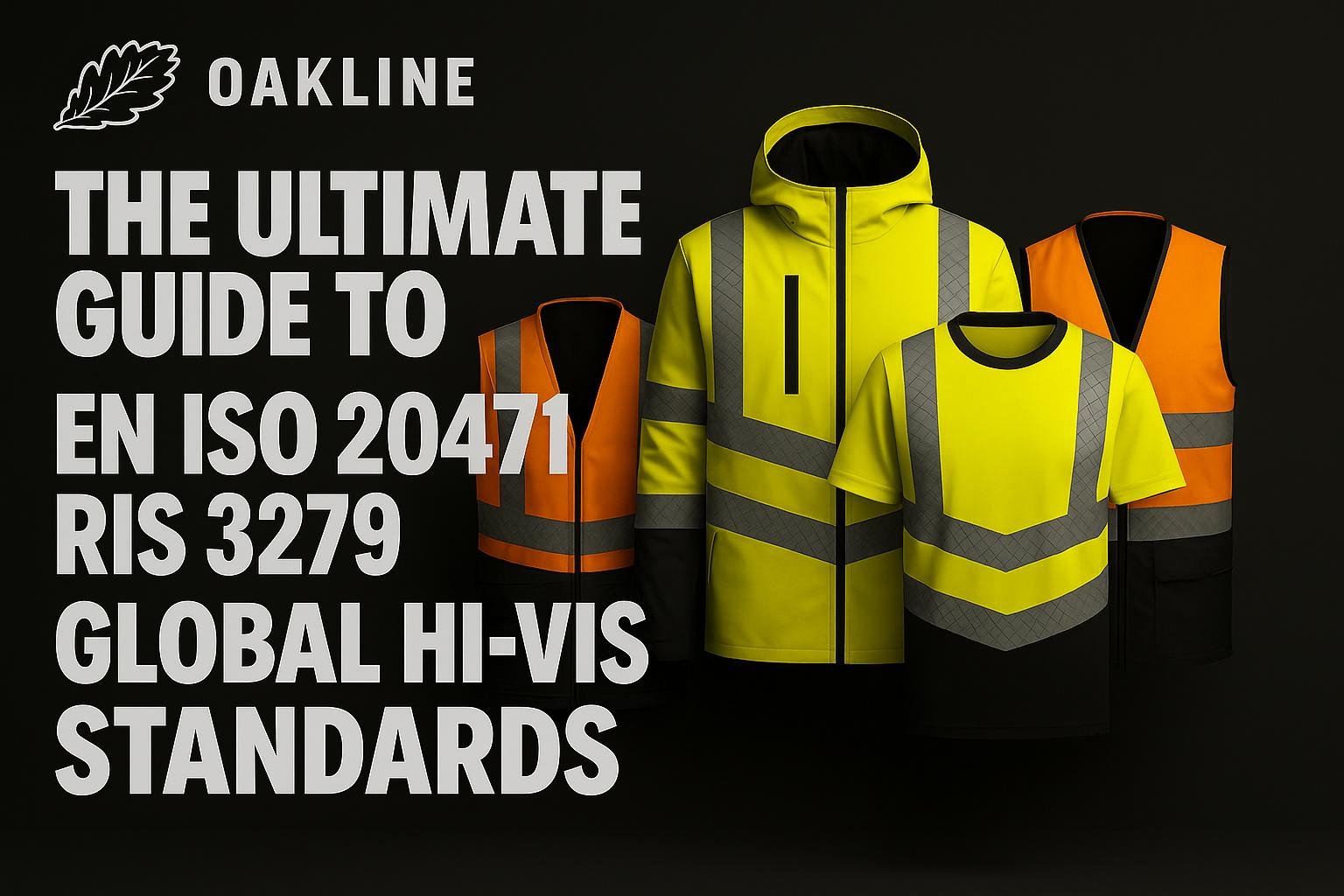
Hi-vis workwear isn’t optional. On construction sites, in rail, logistics yards, and utility projects, visibility is life-saving. But not all hi-vis is created equal — and compliance with the right standards is non-negotiable.
If you’ve ever been confused by codes like EN ISO 20471 or RIS-3279-TOM, you’re not alone. This guide breaks it down, compares global standards, and shows why OAKLINE® isn’t just compliant — we’re setting the benchmark.
🔎 EN ISO 20471 – The Global Gold Standard
What is it?
EN ISO 20471 is the international hi-vis clothing standard. It specifies requirements for colour, retroreflective tape, and minimum areas of visibility.
Key points:
- Classes 1, 2, 3: The higher the class, the greater the visibility.
- Class 1: lowest coverage (e.g., trousers).
- Class 2: medium coverage (e.g., hi-vis vest).
- Class 3: maximum coverage (e.g., jacket).
- Colour options: Fluorescent Yellow, Orange, Red.
- Retroreflective tape: Must perform after washing, bending, and wear.
Where it applies: UK, EU, much of Asia-Pacific.
👉 Every OAKLINE garment is certified to EN ISO 20471 — with designs optimised for maximum comfort and style as well as compliance.
🚆 RIS-3279-TOM – Rail Industry Standard
What is it?
RIS-3279-TOM (Issue 2) is the mandatory rail standard in the UK. It requires hi-vis clothing in fluorescent orange only, with specific tape layouts for visibility in railway environments.
Why it matters:
- Rail workers must wear orange hi-vis for contrast against signal lights.
- Retroreflective tape layout must ensure visibility in tunnels, low light, and when crouching.
👉 OAKLINE rail-compliant gear, like The Kimi Jacket and The Tod Bodywarmer, meets RIS-3279 head-on — with orange designs that don’t just comply, they outlast.
See the official RIS-3279-TOM standard →
🌐 Other Global Hi-Vis Standards
Hi-vis isn’t just regulated in the UK. Across the world, industries have their own standards:
- ANSI/ISEA 107 (USA) – Classes for design and performance, plus Performance Types (roadway vs off-road).
- CSA Z96 (Canada) – Visibility requirements adapted for Canadian climates.
- AS/NZS 4602.1 (Australia/New Zealand) – Designed for harsh sunlight and reflective needs.
- ISO 20471 (International) – Adopted by EU/UK, but recognised globally.
🛠️ Common Problems with “Cheap Compliant” Hi-Vis
Not all hi-vis that passes certification is worth your money. Common failings include:
- Fading fluorescent fabric after a few washes.
- Poor stitching on tape that peels quickly.
- Compliance-only designs that ignore comfort, durability, and worker pride.
This is where OAKLINE cuts through the noise.
🌟 How OAKLINE Goes Beyond
Compliance is just the start. OAKLINE is engineered for the real world:
- Durability first – 300D Oxford outer shells, reinforced seams, dirt-concealing panels.
- Premium tape layouts – not just compliant, but positioned for comfort and movement.
- Rail, construction, logistics, utilities – every garment designed with end-use in mind.
- Designed in the UK – built for the industries we know best.
We don’t just meet EN ISO 20471 and RIS-3279. We future-proof workwear with layered systems (jackets, bodywarmers, vests, tees) that work together as a complete kit.
⚡ The Verdict
Hi-vis standards protect lives. But standards alone don’t guarantee quality. OAKLINE goes beyond compliance to deliver hi-vis workwear that:
- Meets EN ISO 20471 + RIS-3279
- Beats the lifespan of cheap PPE
- Keeps teams looking sharp on site
When your site team wears OAKLINE, you’re not just ticking a box.
👉 You’re investing in safety, durability, and a brand built for the future of workwear.
Explore OAKLINE’s full compliant range →