
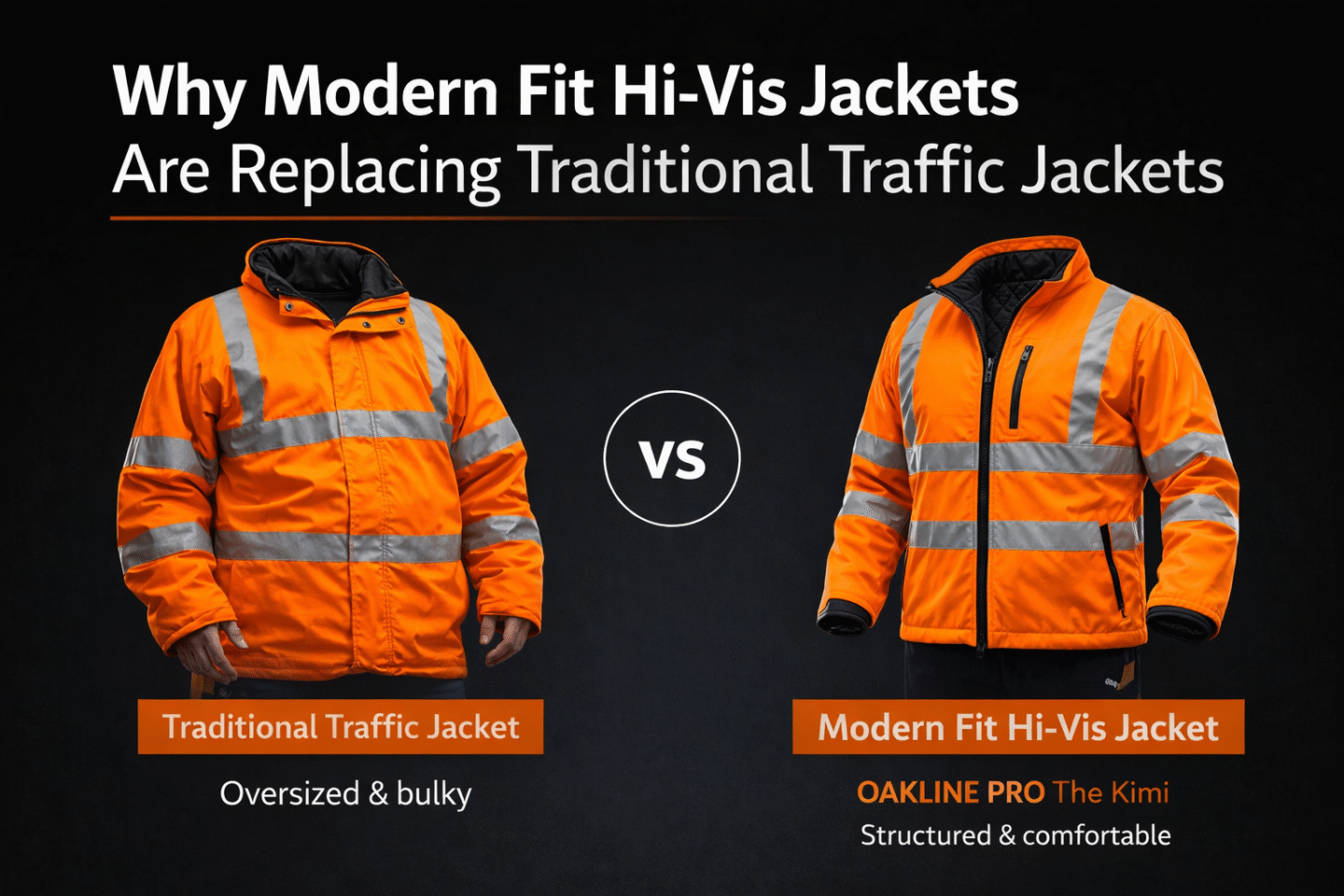
For decades, most hi-vis jackets have followed the same design formula.
Oversized.
Boxy.
Loose fitting.
The thinking behind this was simple: make the garment large enough to fit everyone and allow space for layering.
It worked.
But the reality of modern work environments has changed.
Construction sites, rail infrastructure projects and logistics operations now demand workwear that allows better movement, greater durability and a more professional appearance.
As a result, a new category of workwear is quietly emerging.
Modern fit hi-vis.
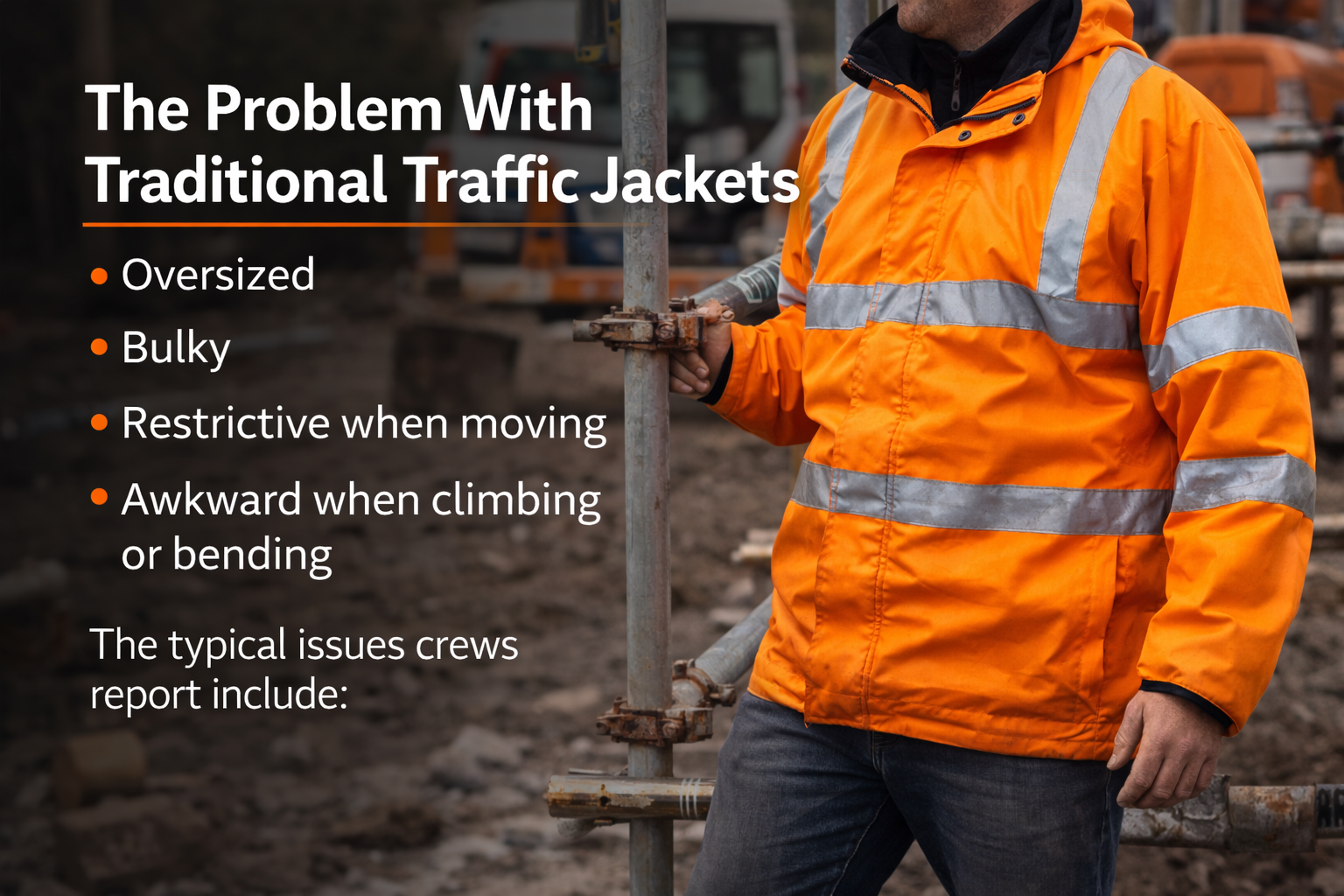
The Problem With Traditional Traffic Jackets
Traditional traffic jackets were designed to prioritise visibility above everything else.
Fit and movement were secondary considerations.
That’s why many standard hi-vis jackets still feel:
• oversized
• bulky
• restrictive when moving
• awkward when climbing or bending
The typical issues crews report include:
• sleeves that feel too wide
• excess fabric around the waist
• jackets catching on equipment
• uncomfortable movement when working overhead
These problems are rarely mentioned during purchasing decisions, but they quickly become obvious once the jackets are worn daily on site.
Traditional Fit vs Modern Fit Hi-Vis
| Traditional Traffic Jacket | Modern Fit Hi-Vis Jacket |
|---|---|
| Boxy oversized cut | Structured fit |
| Excess fabric around body | Closer profile |
| Can snag on equipment | Reduced snag risk |
| Heavy bulky insulation | Lightweight thermal design |
| Looks oversized | Cleaner professional appearance |
Modern hi-vis garments are designed around movement first, not simply maximum fabric coverage.
The goal is not to make jackets tight.
The goal is to make them functional.
Why Fit Matters More Than Most Buyers Realise
When workwear is worn for 8–12 hours a day, small differences in fit can make a big impact.
A better fitting jacket improves:
Mobility
Workers can bend, climb and reach more easily.
Comfort
Less excess material means less heat build-up and friction.
Safety
Loose fabric catching on infrastructure or equipment becomes less likely.
Adoption
Crews are more likely to wear jackets properly when they are comfortable.
Many site managers report that poorly fitting jackets often end up half-zipped or removed entirely, especially when workers feel restricted.
In other words, fit directly influences how consistently PPE is actually worn.
Why Many Teams Are Moving Away From “One Size Fits All”
The traditional oversized approach made sense when garments needed to fit everyone.
But today’s workwear buyers are increasingly looking for garments that balance:
• compliance
• durability
• movement
• appearance
This shift has led to more manufacturers developing structured hi-vis designs that move with the body rather than hanging loosely from it.
These designs typically include:
• shaped panel construction
• articulated sleeves
• lighter insulation layers
• segmented reflective tape
Together, these changes improve flexibility without compromising visibility.
A Real Example: OAKLINE PRO The Kimi
One example of this newer design approach is OAKLINE PRO The Kimi.
The jacket was developed specifically to address the limitations of traditional hi-vis outerwear.
Instead of relying on the typical oversized pattern, it uses a more structured fit that sits closer to the body while still allowing layering underneath.
Key features include:
• Structured modern fit for improved mobility
• Segmented reflective tape that moves with the garment
• Durable Oxford fabric outer shell for long-term wear
• Quilted thermal lining for warmth without excess bulk
• Heavy-duty zip construction designed for repeated use
The result is a jacket that maintains full compliance while improving comfort and usability on site.
Comparing Traditional Jackets With Modern Designs
| Feature | Traditional Traffic Jacket | Modern Fit Jacket (Example: The Kimi) |
|---|---|---|
| Fit | Oversized | Structured |
| Reflective Tape | Standard stitched | Segmented flexible tape |
| Movement | Limited | Improved flexibility |
| Bulk | Heavy insulation | Lightweight thermal lining |
| Appearance | Boxy | Clean, professional profile |
The difference is subtle on paper, but noticeable when worn daily.
Why Appearance Matters On Site
Hi-vis workwear is primarily about safety.
But appearance still plays a role, particularly for contractors working on high-profile infrastructure projects.
A well-fitting uniform:
• looks more professional
• creates consistency across teams
• reflects positively on the contractor
Modern workwear buyers are increasingly aware that presentation matters – particularly when teams interact with clients, inspectors or the public.
The Future of Hi-Vis Workwear
The next generation of high-visibility garments will continue to evolve beyond the traditional traffic jacket.
Future designs are already focusing on:
• improved movement
• lighter thermal insulation
• longer durability cycles
• smarter fabric engineering
Visibility will always remain the priority.
But comfort, durability and functionality are quickly becoming just as important.
Final Thoughts
Traditional hi-vis jackets served the industry well for many years.
But work environments have changed.
Crews now expect workwear that allows them to move comfortably, work efficiently and maintain a professional appearance on site.
That is why modern fit hi-vis garments are increasingly replacing the old oversized traffic jacket.
Not because they are different.
But because they are designed for how people actually work today.