

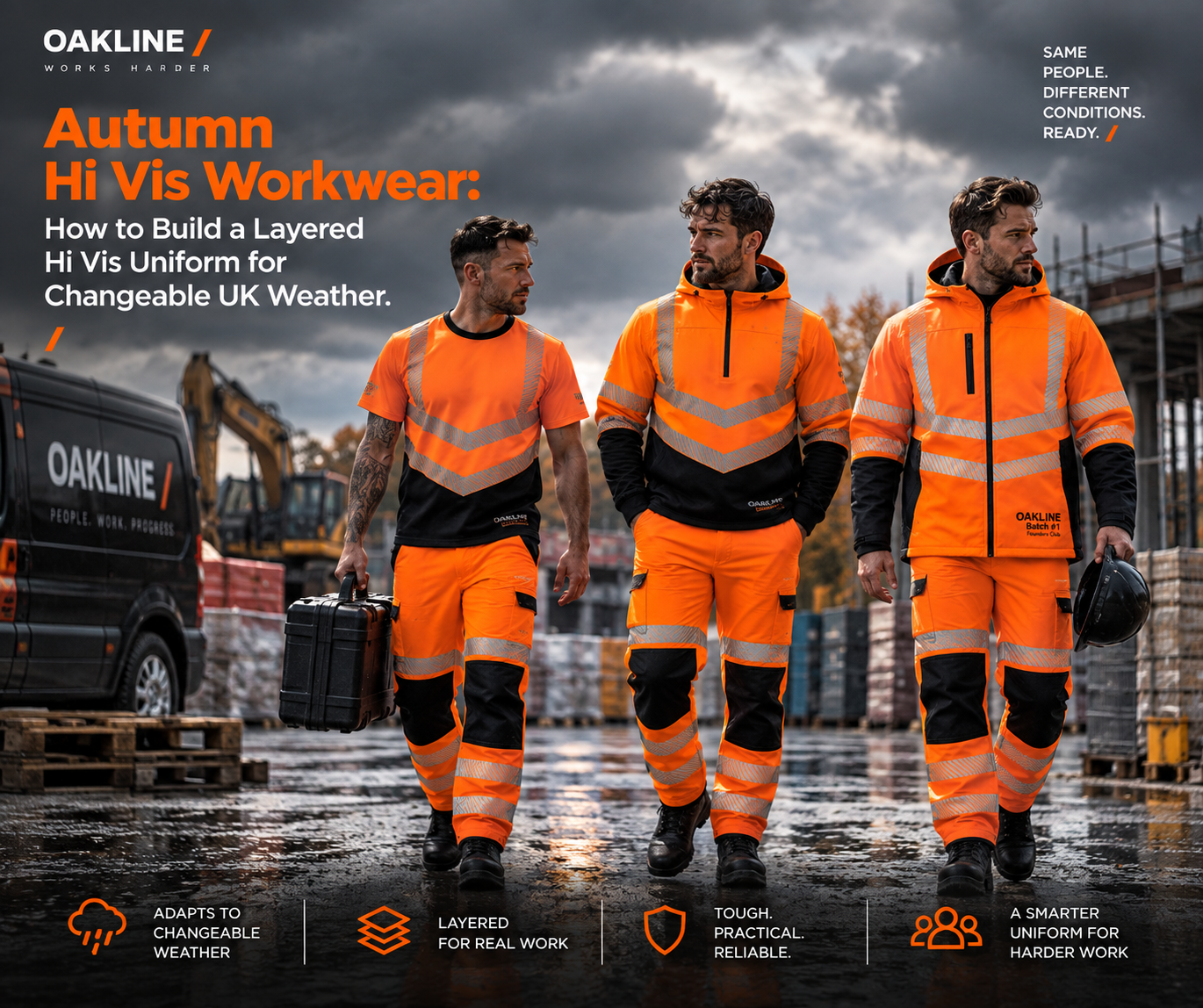
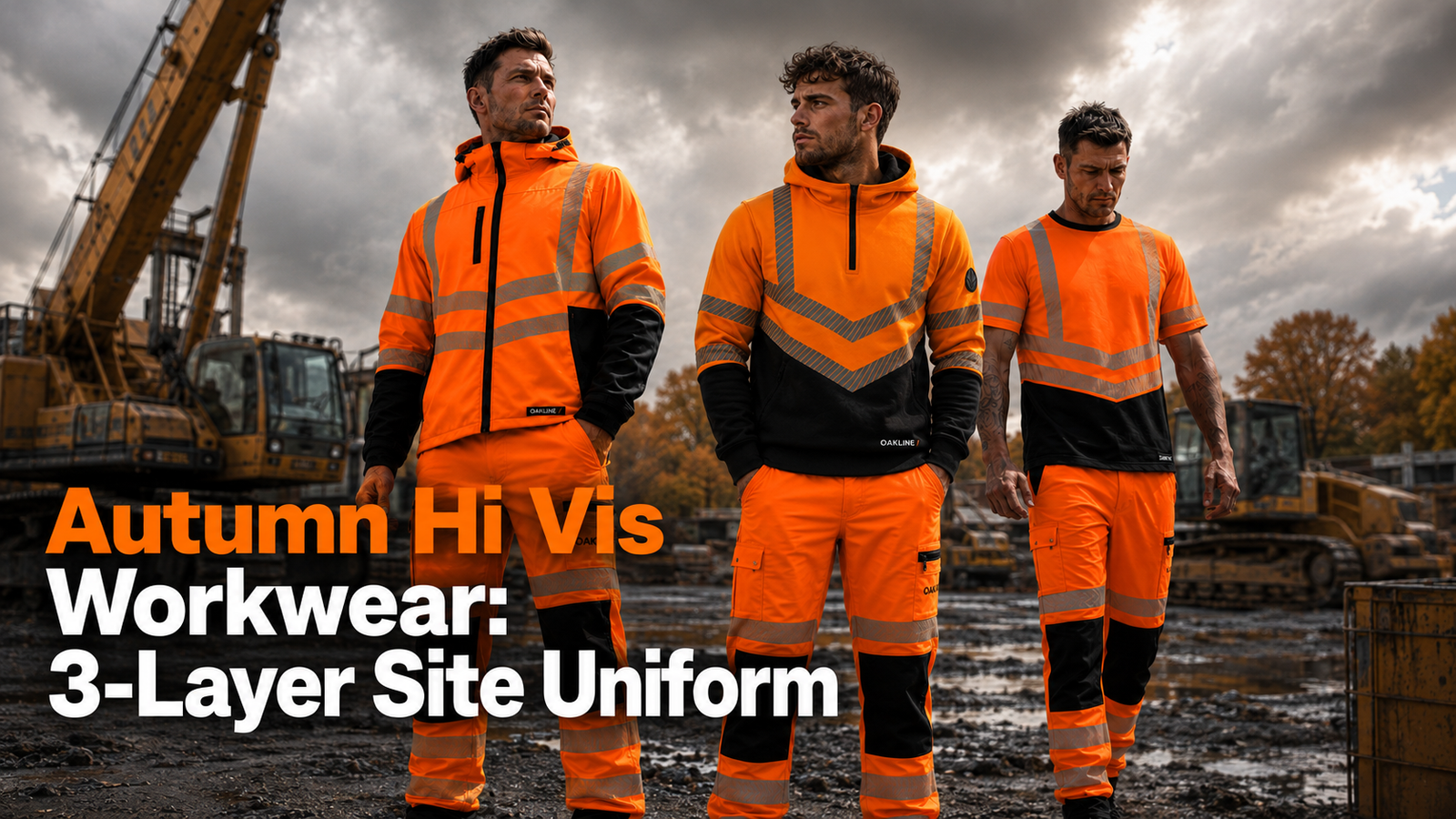
Autumn hi vis workwear shouldn’t mean one heavy coat for everyone. For most workers, a layered hi vis uniform works harder. A base layer, a mid layer and an outer layer can be added or removed as the shift and the weather change.
Summer is disappearing fast.
After an exceptionally warm, dry summer across much of the UK, the Met Office said in late August 2026 that a stronger Atlantic influence would bring more rain, stronger winds and more changeable conditions. By mid-September, bands of rain were crossing England and Wales, with showers and blustery winds further north.
This is when a hi vis uniform gets tested.
Why does autumn change what your hi-vis uniform needs to do?
In autumn, conditions change several times within a single shift. Workers need hi-vis workwear that adapts to rain, wind and temperature swings without the uniform being replaced.
Picture a typical day:
- 7:30am: outside in a yard.
- 8:15am: driving.
- 9:00am: back outside.
- 11:00am: carrying materials.
- 12:30pm: in a warm canteen.
- 2:00pm: rain.
- 3:30pm: back in the vehicle.
One heavy garment can’t be right for all of that.
HSE’s thermal comfort guidance backs this up. Temperature alone doesn’t decide whether someone is comfortable. Air movement, humidity, clothing and PPE insulation, and physical workload all play a part.
So think beyond the coat.
Is one heavy hi-vis jacket enough for autumn?
Not usually. A worker moving between vehicles, indoor areas and exposed ground can overheat in a heavy jacket one hour and be underdressed the next. Layers give them control.
How do you layer hi-vis workwear properly?
Start light. Build up. Keep the trousers consistent.
| Conditions | OAKLINE layer combination |
|---|---|
| Mild, dry | The Robin + The Calders |
| Cooler, changeable | The Cole + The Calders (Robin underneath) |
| Cold core, active arms | The Tod + The Calders (Robin or Cole underneath) |
| Wet, windy, exposed | The Kimi + The Calders (layers underneath as needed) |
Base layer: The Robin hi-vis T-shirt
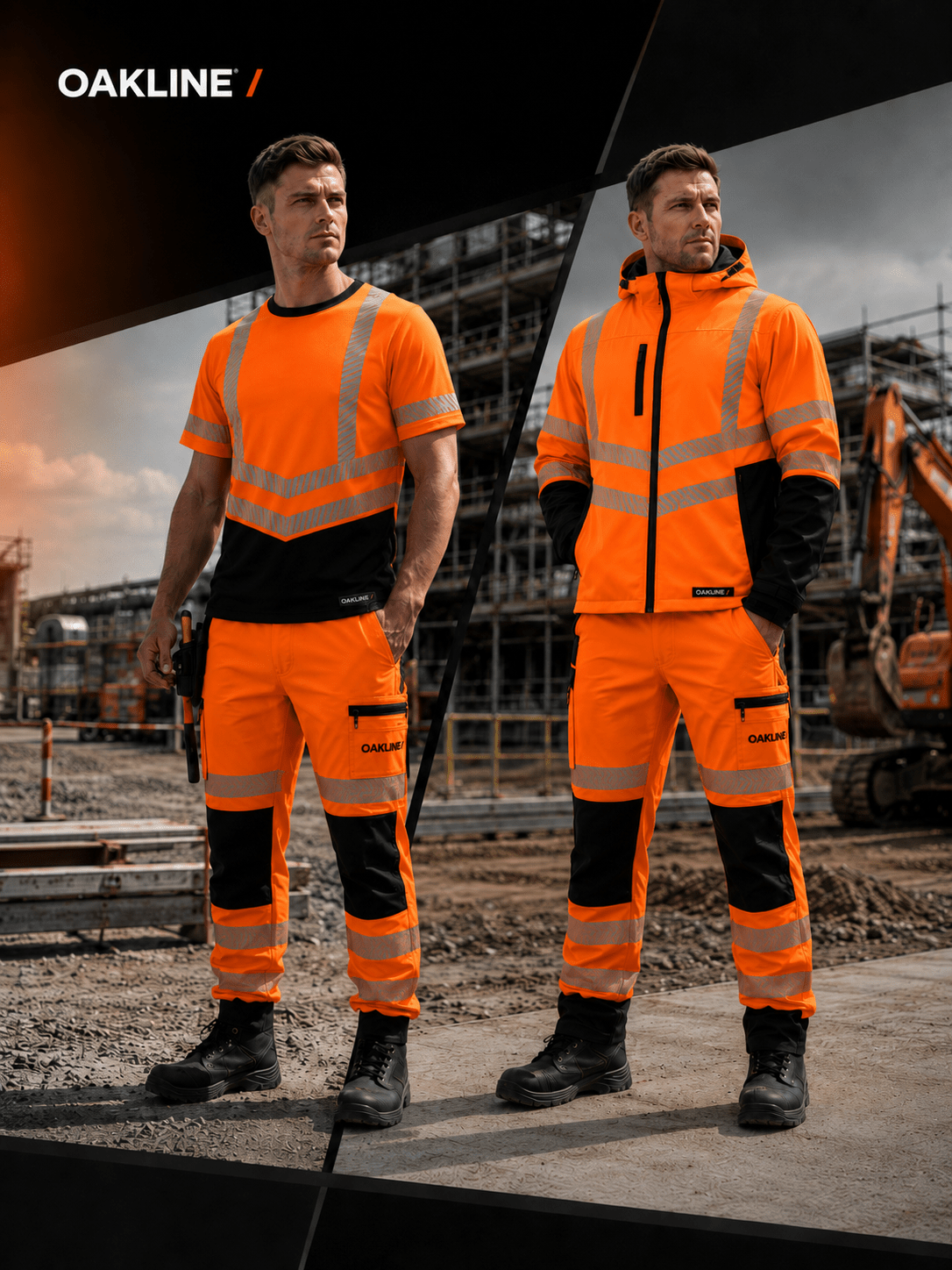
The Robin hi-vis T-shirt is OAKLINE’s lightweight upper layer. It is built around a breathable feel and a cleaner modern fit. The orange-and-black OAKLINE look and reflective tape layout give the uniform a sharper base.
In summer, it’s the lighter option.
In autumn, don’t retire it. Layer over it.
The garment bought for summer keeps working through the season. For procurement teams, that is better value from the same spend.
Lower layer: The Calders stretch hi-vis trousers
The weather changes above the waist. Your trousers don’t need to.
The Calders hi-vis trousers are made from 96% polyester and 4% spandex with 4-way stretch. They have zipped front and leg storage, two-tone hi-vis styling with black knee and waistband areas, and a modern fit.
The autumn benefit is consistency. You adjust the upper layers and leave the trousers alone.
Mid-layer: The Cole hi-vis hoodie
The Cole hi-vis hoodie is where the uniform starts earning its place in cooler weather.
It has a quarter zip, zipped kangaroo pockets, a two-tone hi-vis black lower section and segmented reflective tape. It adds real warmth without jumping straight to a jacket.
It suits workers who move between environments:
- Warehouse to yard.
- Van to site.
- Indoors to outdoors.
- Active work followed by lower-activity periods.
Add a layer. Remove a layer. The uniform stays consistent.
Core warmth: The Tod hi-vis bodywarmer
Sometimes the worker doesn’t need sleeves.
The Tod hi-vis bodywarmer adds core coverage without moving into a full jacket. It works as a transitional garment where the job, environment and required PPE allow it.
One garment doesn’t work everywhere. That’s the point of having a range.
Outer layer: The Kimi slim-fit hi-vis jacket
Some days, an outer layer is the only sensible choice.
The Kimi hi-vis jacket has a modern slim fit rather than the oversized shape of traditional workwear. That matters when you’re layering underneath it.
-
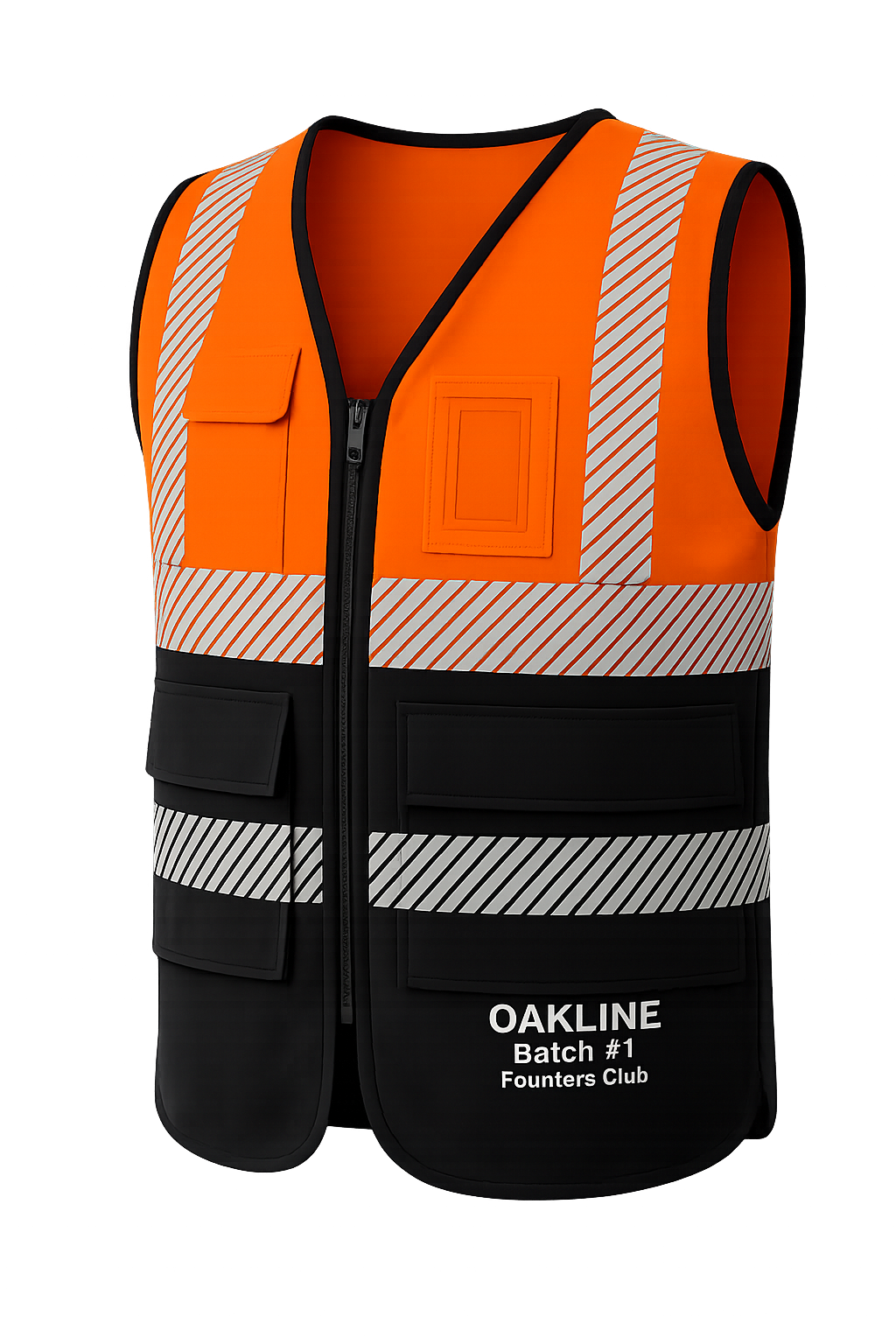
OAKLINE PRO The Blake Hi-Vis Executive Vest – Orange – Founders Club
£8.95 -
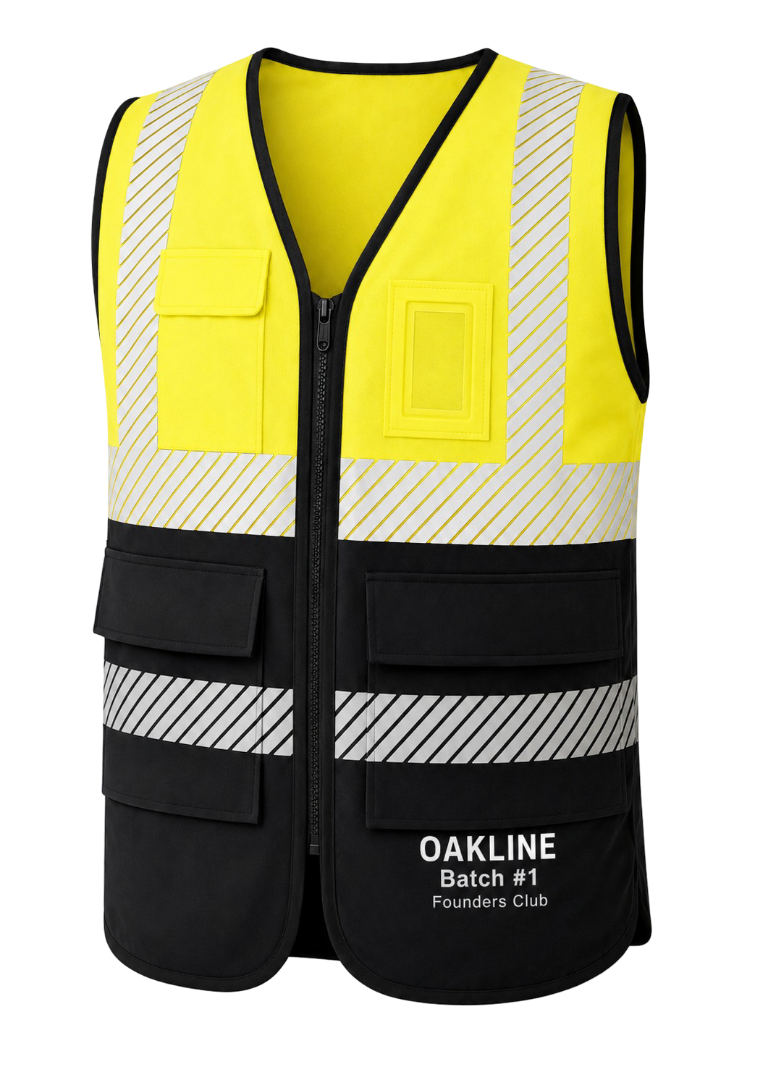
OAKLINE PRO The Blake Hi-Vis Executive Vest – Yellow – Founders Club
£8.95 -
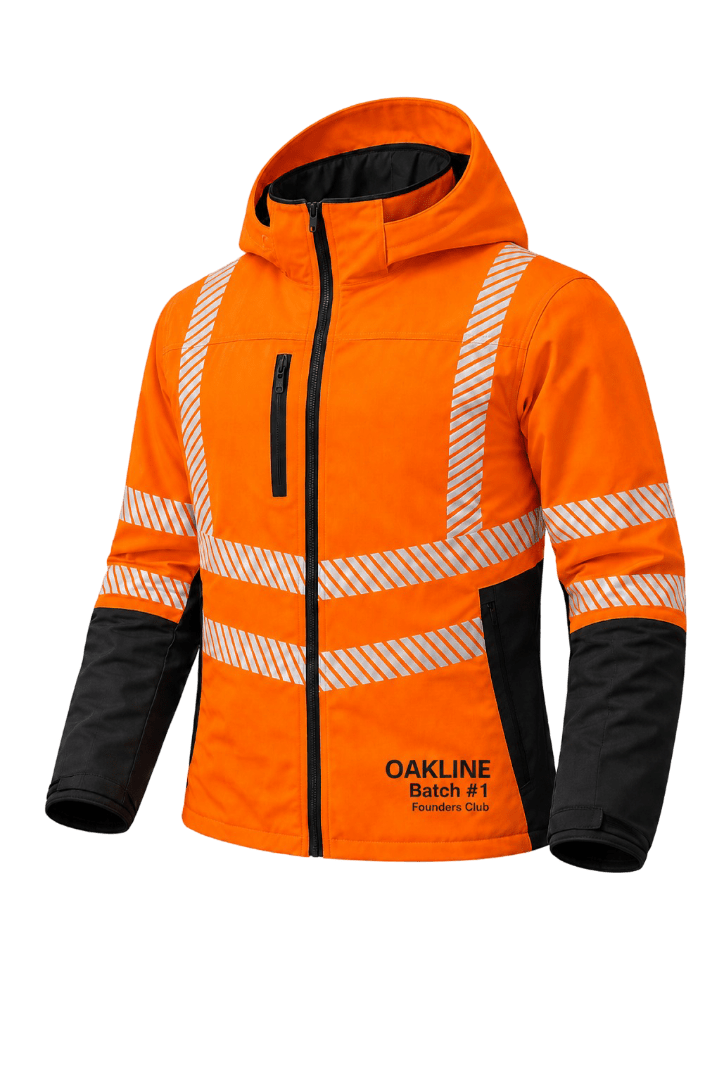
OAKLINE PRO The Kimi Slim Fit Hi Vis Jacket – Orange – Founders Club
£44.99 -
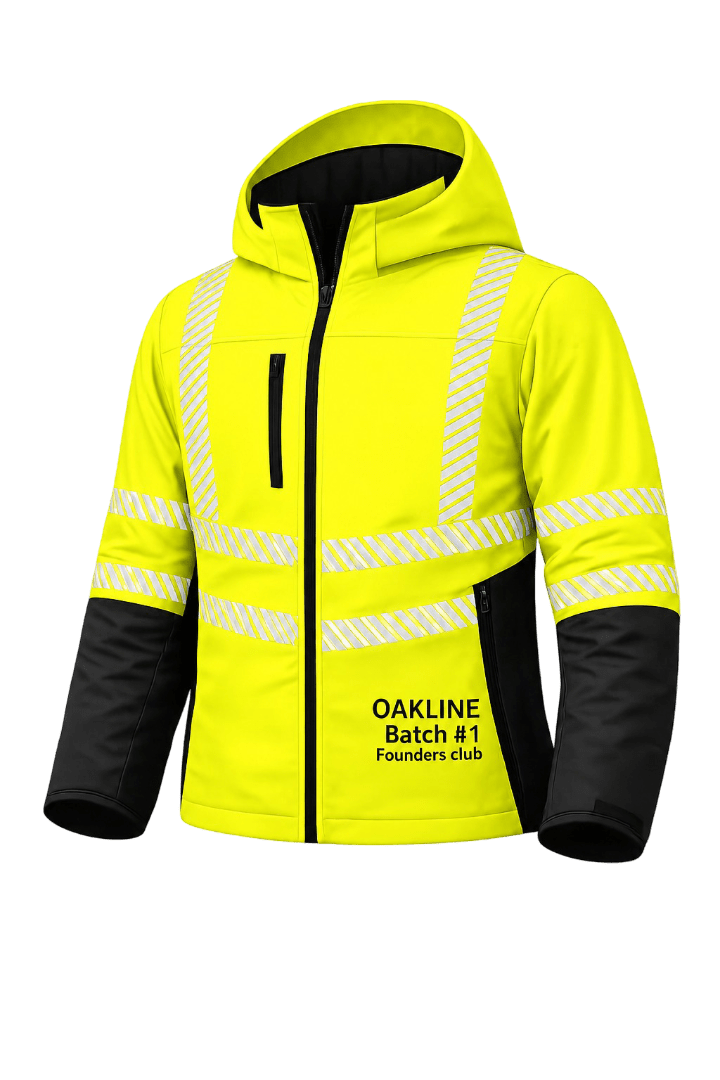
OAKLINE PRO The Kimi Slim Fit Hi Vis Jacket – Yellow – Founders Club
£44.99 -
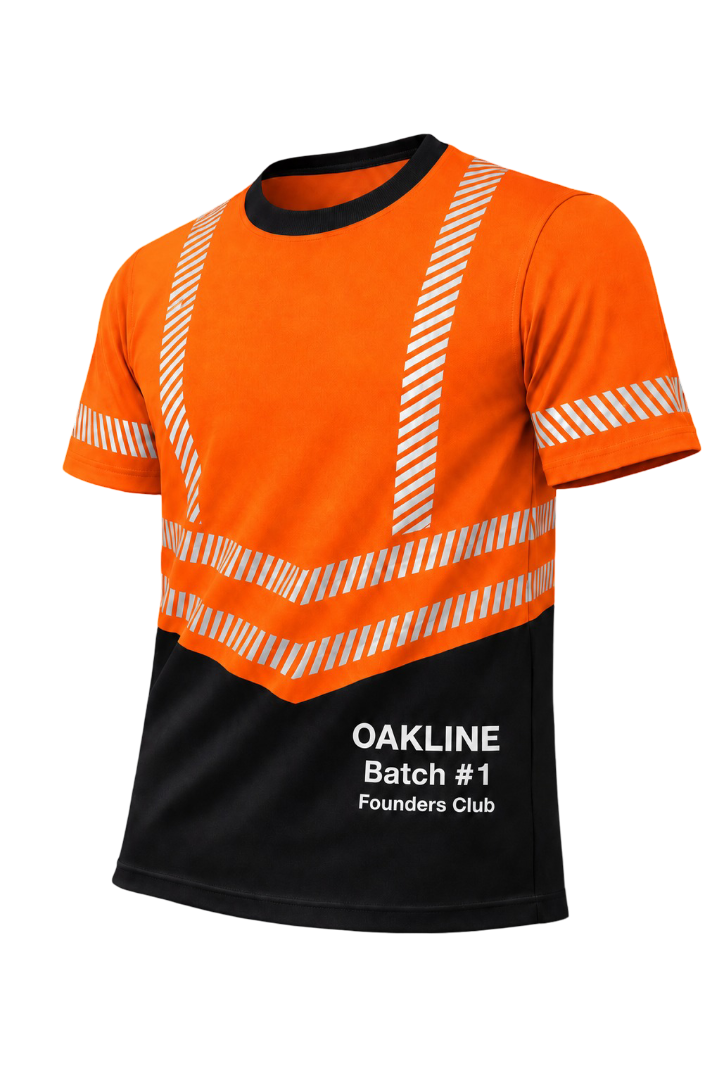
OAKLINE PRO The Robin Hi-Vis T-Shirt – Orange – Founders Club
£15.99 -
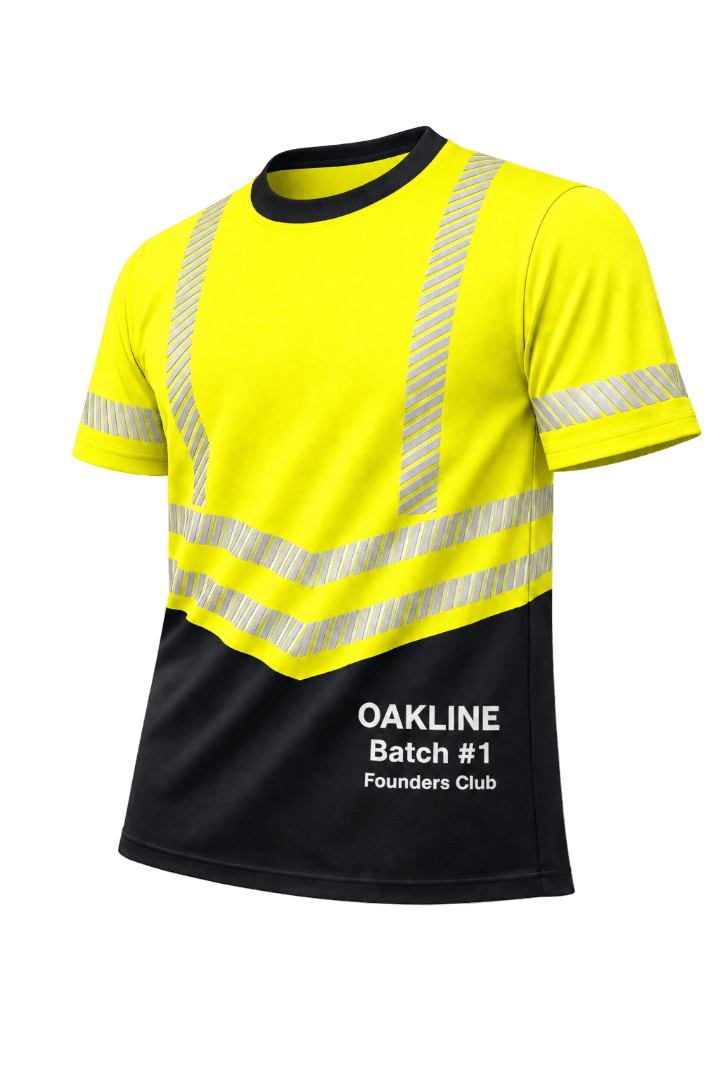
OAKLINE PRO The Robin Hi-Vis T-Shirt – Yellow – Founders Club
£15.99 -
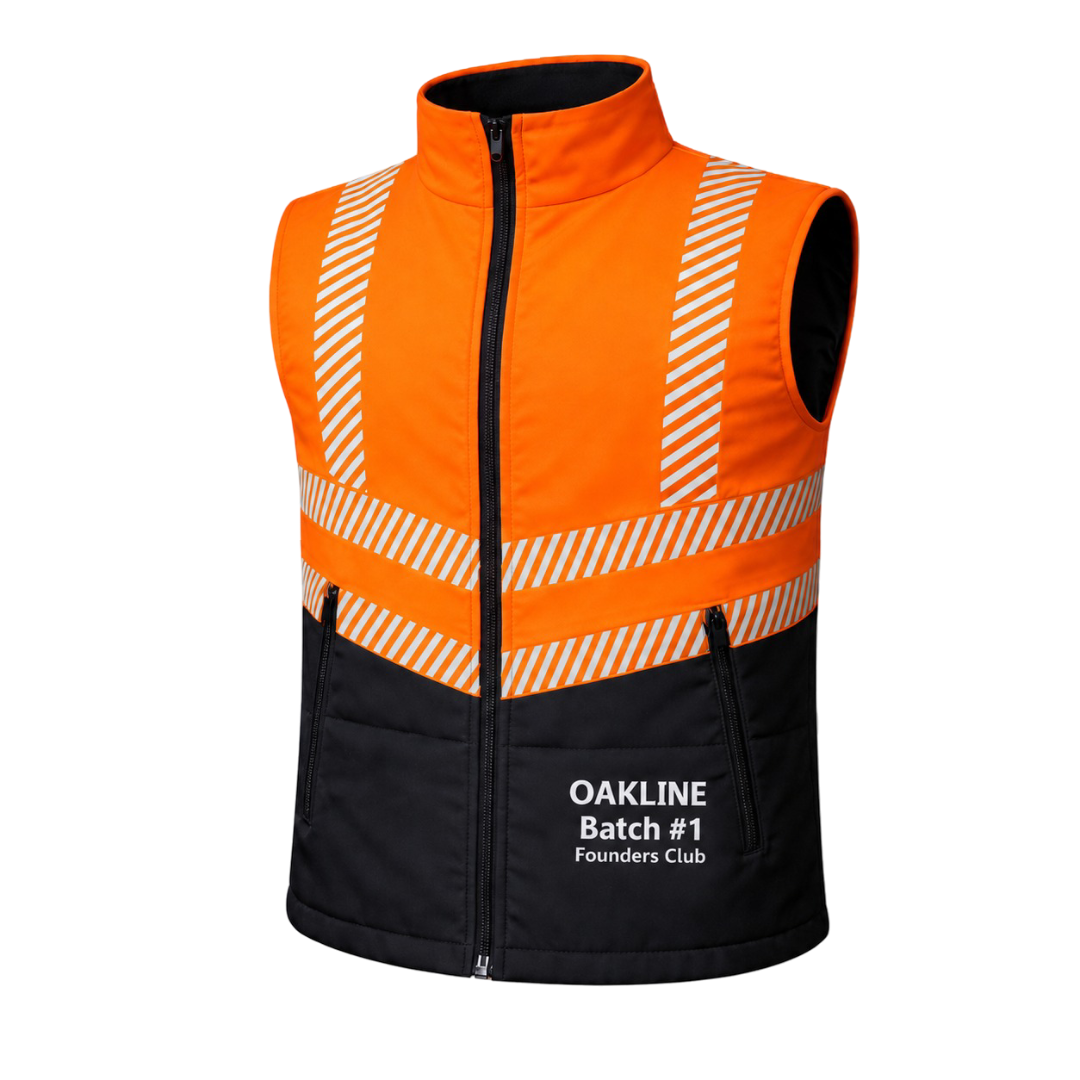
OAKLINE PRO The Tod Hi Vis Bodywarmer – Orange – Founders Club
£29.99 -
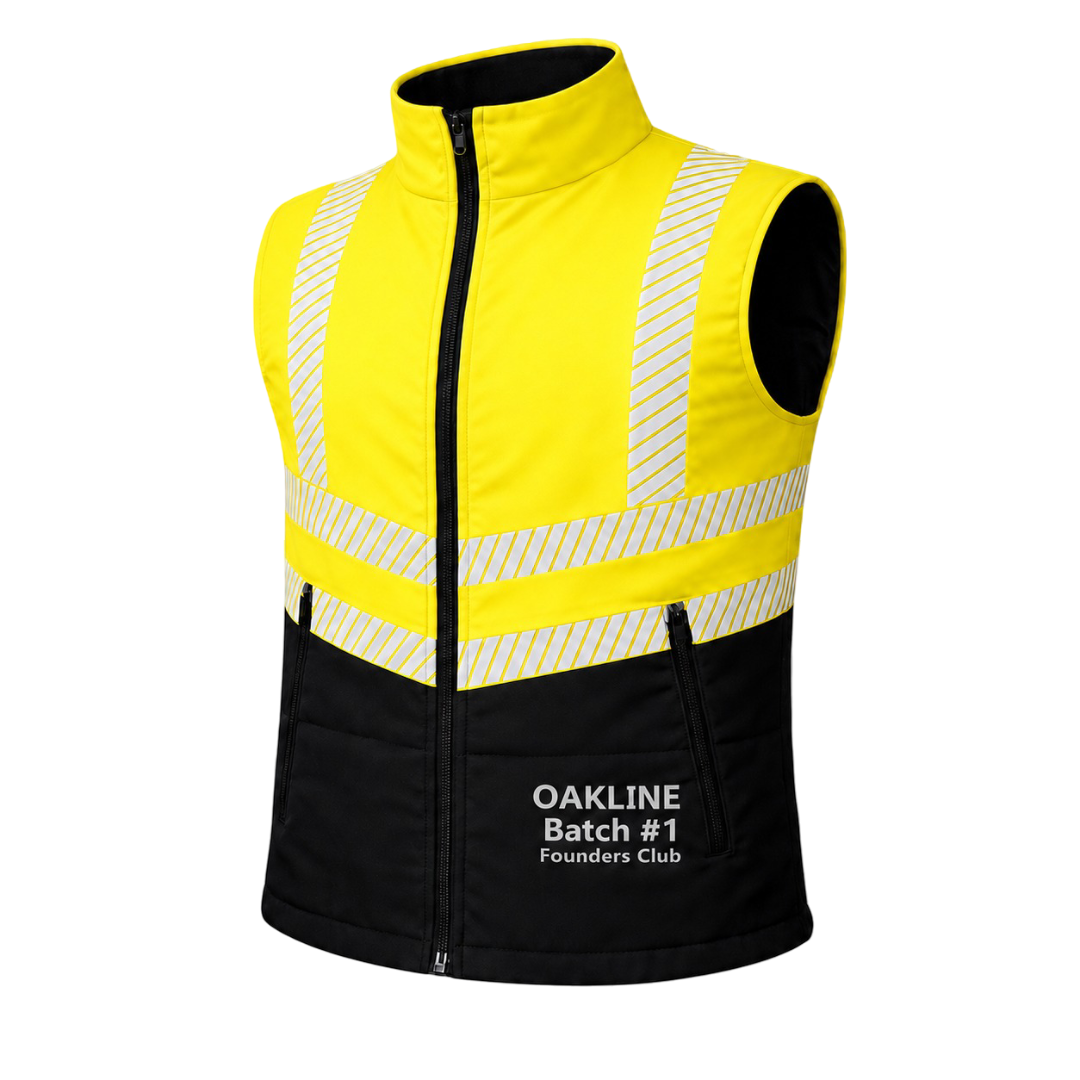
OAKLINE PRO The Tod Hi Vis Bodywarmer – Yellow – Founders Club
£29.99 -
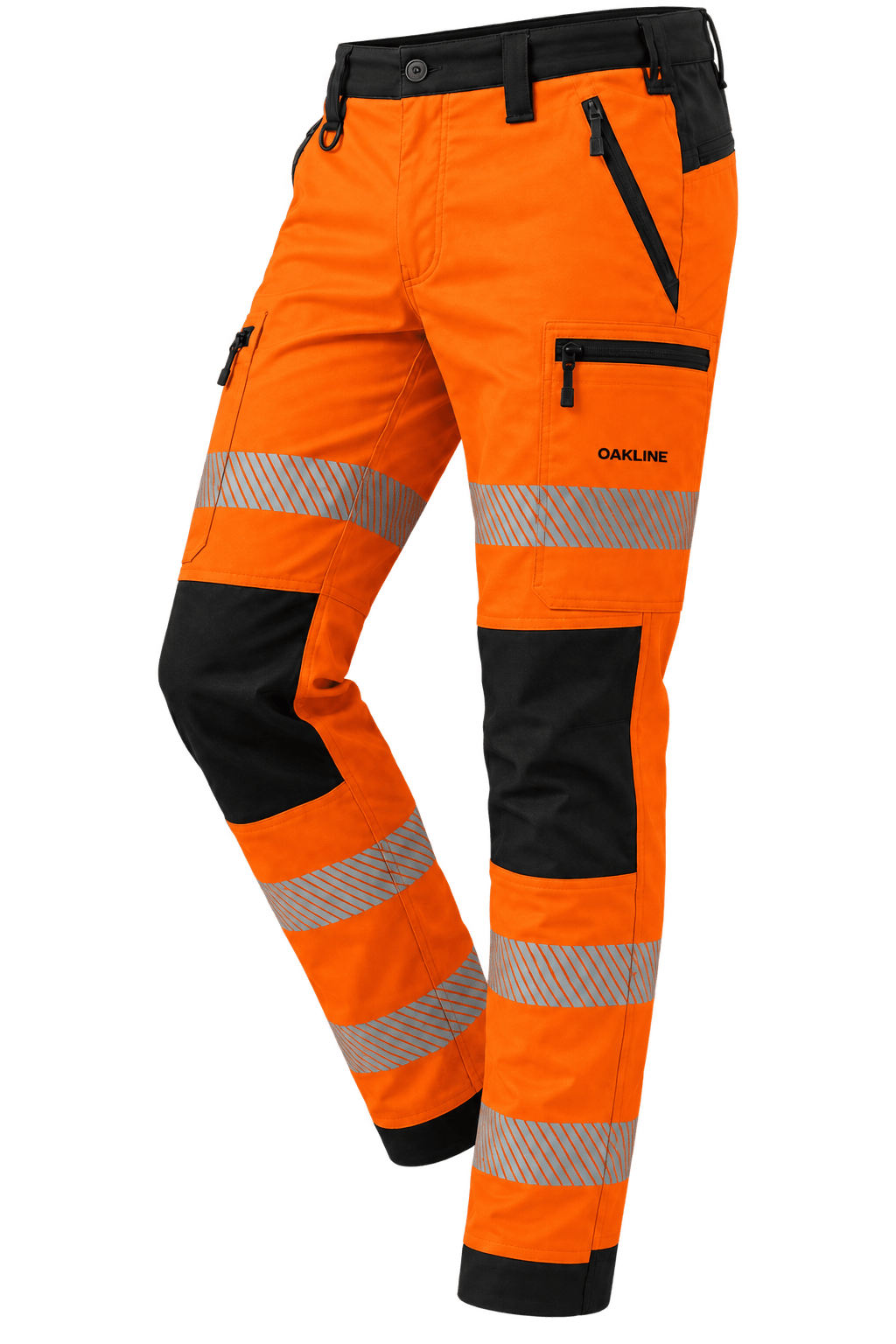
OAKLINE The Calder Stretch Hi Vis Trousers – Orange
£31.99 -
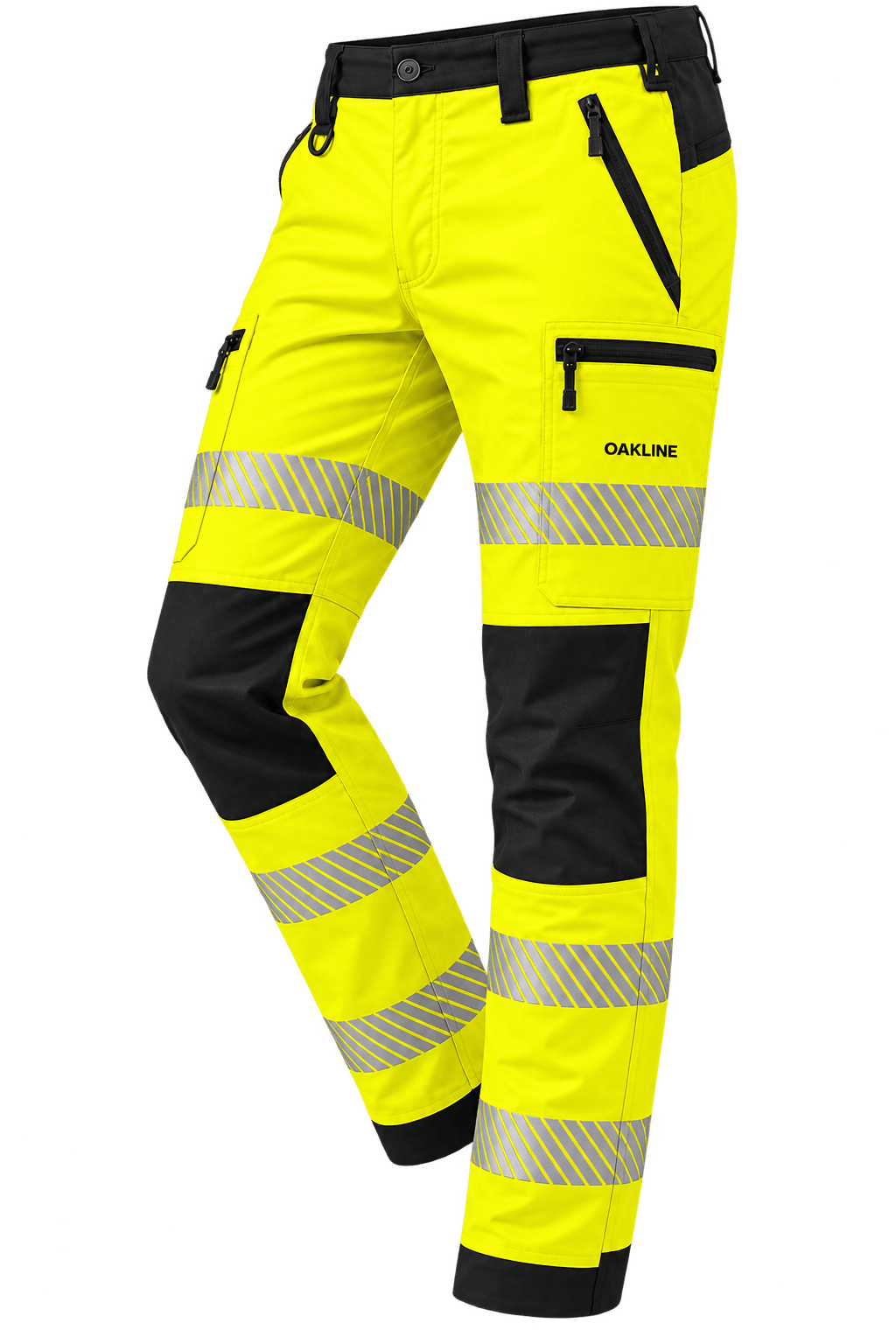
OAKLINE The Calder Stretch Hi Vis Trousers – Yellow
£31.99 -
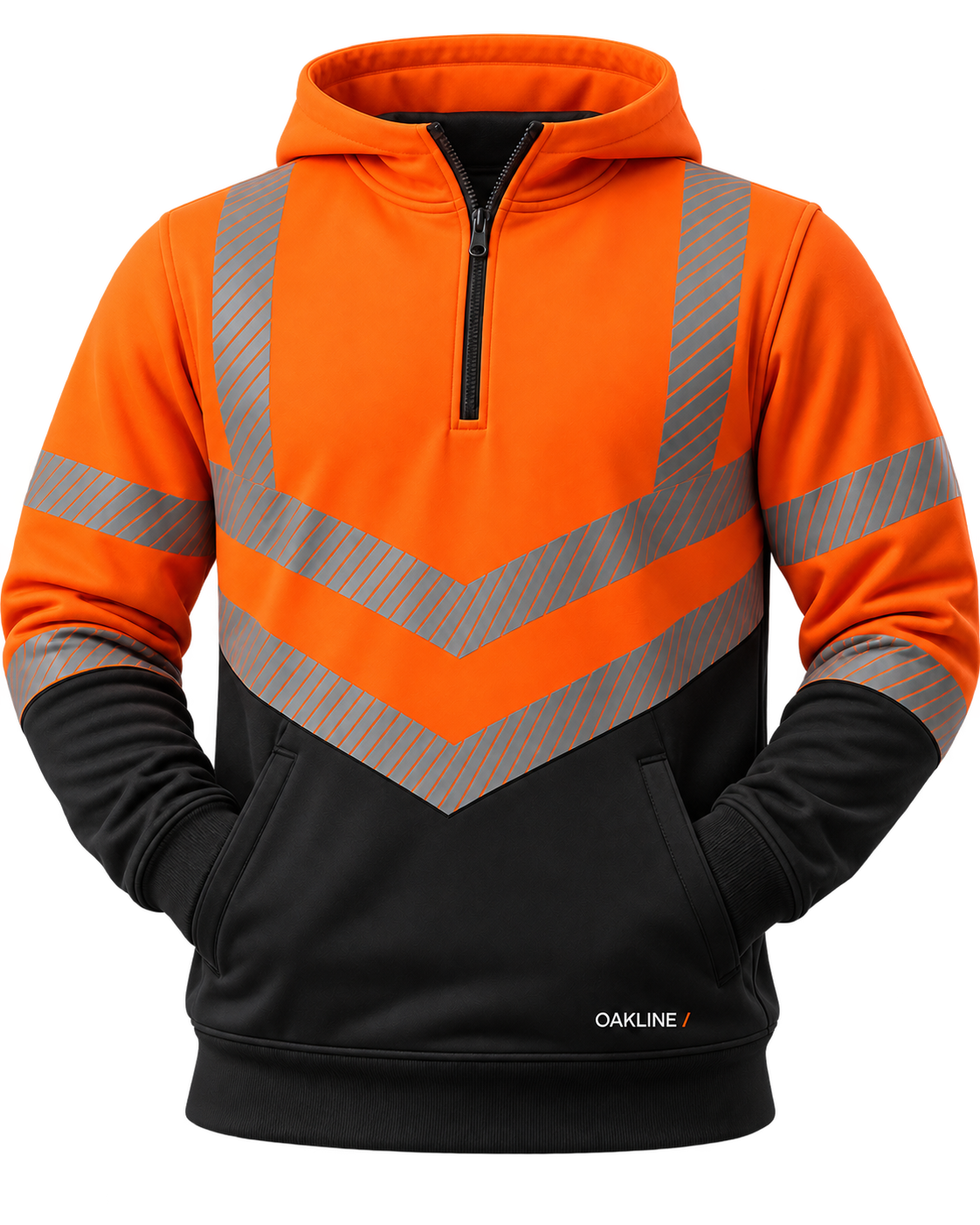
OAKLINE The Cole 1/4 Zip Hi Vis Hoodie – Orange
£32.99 -
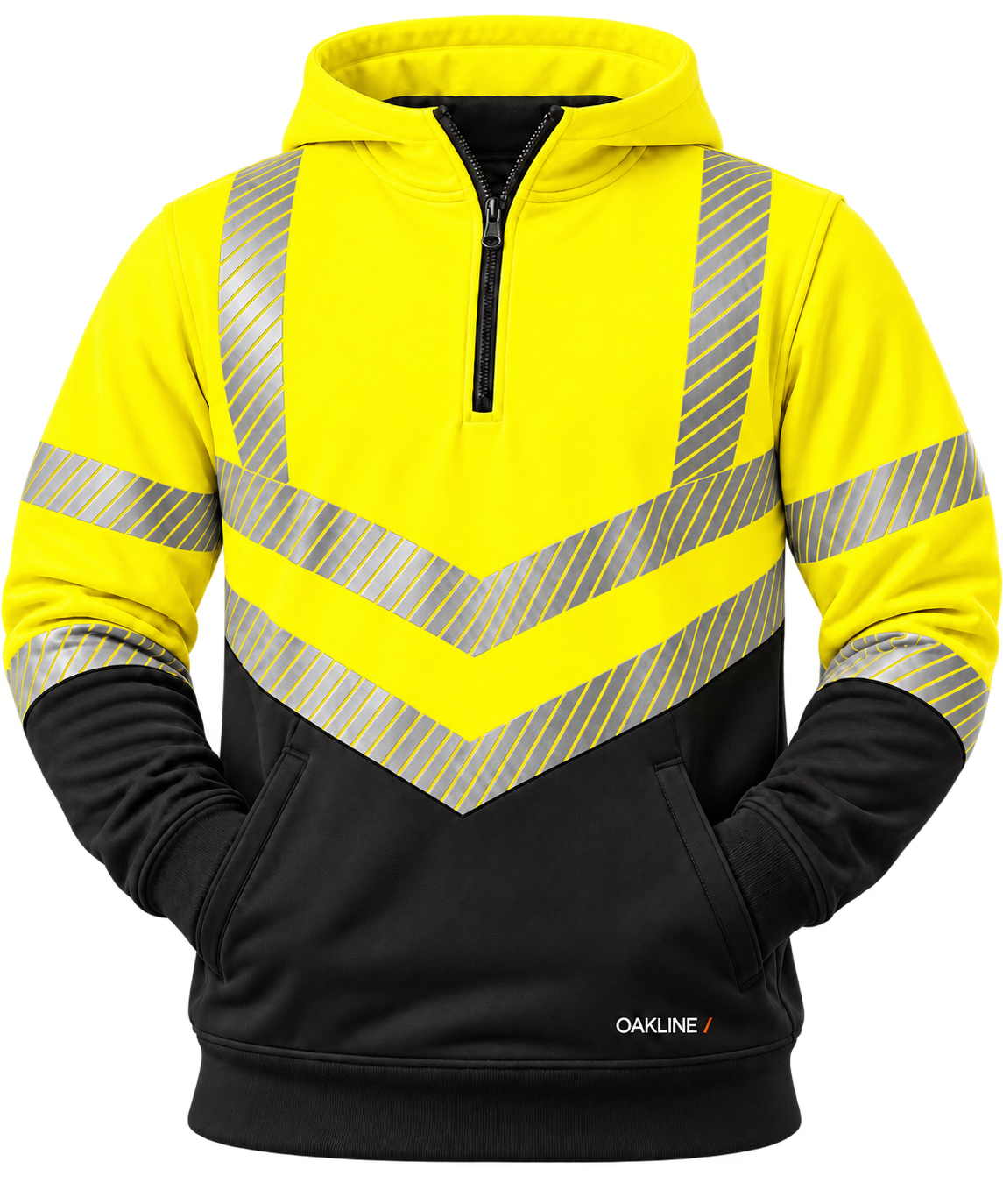
OAKLINE The Cole 1/4 Zip Hi Vis Hoodie – Yellow
£32.99
How should you size a hi-vis jacket for layering?
Size the jacket with the layers the worker will actually wear underneath it. The Kimi fits slimmer than traditional workwear. A true Medium who wants room for The Cole underneath may prefer a Large.
Don’t size the jacket in isolation. Try it on over the real mid-layer. That one step prevents a lot of returns and sizing complaints later.
Why does visibility matter more in autumn?
Autumn brings more than cold:
- Wind.
- Rain.
- Earlier darkness.
- Poorer visibility.
- Changing site conditions.
HSE’s construction traffic guidance says lighting may be needed after sunset or in bad weather, and that pedestrians on construction sites should wear hi-vis clothing.
That doesn’t make every hi-vis garment suitable for every job. PPE must still be selected for the actual risks involved. But as conditions get worse, the uniform decision matters more.
What do rail buyers need to check before an autumn order?
Rail work has its own requirements. On the GB mainline railway, orange hi-vis clothing is specified under RIS-3279-TOM, the rail industry standard. Rail buyers should confirm that every garment meets RIS-3279-TOM and their contract requirements before it is issued for trackside work.
Colour alone is not compliance. An orange garment is not automatically rail-approved.
Before ordering:
- Check the certification of each garment. Don’t rely on the colour or the product description.
- Check the label. Confirm the standard is stated on the garment itself.
- Check your client or principal contractor requirements. Some go beyond the minimum.
- Check how layers interact. Anything worn on top covers what’s underneath, so the outer garment must meet the requirement on its own.
OAKLINE only states compliance for a specific garment once testing confirms it. If you’re buying for rail, ask us which garments are suitable for your application before you order.
Why buy a hi-vis range instead of single garments?
A range gives you a consistent company hi-vis uniform. Buying one garment at a time gives you a collection that looks different every time the weather changes.
Most company workwear looks like this:
- Trousers from one brand.
- T-shirt from another.
- A random hoodie.
- A jacket with a different fit and styling.
Then a new starter joins and the whole process starts again.
OAKLINE is built differently:
- One product family.
- A recognisable visual direction.
- Modern fits.
- Practical details.
- Garments designed to sit alongside each other as the season changes.
It is positioned as affordable premium: above basic workwear, without the cost of corporate-uniform programmes.
What’s next for the range?
For now, OAKLINE is building this system through hi-vis: The Robin, The Calders, The Cole, The Tod and The Kimi, alongside the wider range.
Next comes OAKLINE CORE, a range of black and navy plain workwear for roles that don’t need hi-vis. A business will be able to move between job roles without losing its uniform identity.
But first, the hi-vis range has a job to do. Autumn is where a proper range makes sense.
5 questions to ask before your autumn hi-vis workwear order
- Where does this person actually work during the day? Look at their real working environment, not just their job title.
- Do they move between indoors, vehicles and exposed areas? If so, adaptability matters more than weight.
- Can the garments layer properly? Don’t find out after delivery that the hoodie and jacket combination is too restrictive.
- Does the uniform still look consistent with different layers on? Your team shouldn’t look different every time the temperature drops.
- Are you buying a range, or just filling gaps? There’s a difference, and it shows.
Autumn hi-vis workwear should adapt
UK weather is already turning.
That doesn’t mean every worker needs the biggest jacket you can find. For most businesses, the smarter answer is a layered hi-vis uniform that adapts through the shift and across the season.
- Start light.
- Add layers.
- Get the fit right.
- Keep the team consistent.
- Make sure the PPE selected is right for the job.
Don’t just prepare for colder weather. Prepare for changing weather.
Where can you buy OAKLINE hi-vis workwear?
Buy OAKLINE online, or ask your existing workwear supplier or distributor for OAKLINE. If you’re kitting out a full team, get in touch for trade and bulk pricing.
Autumn hi-vis workwear FAQs
What hi-vis workwear should employees wear in autumn?
There isn’t one universal autumn setup. The right clothing and PPE depend on the job, the environment and the risks. For general uniform planning, adaptable layers help workers adjust as conditions and activity levels change.
Is a hi-vis jacket enough for autumn?
Not always. Workers who move between vehicles, indoor areas and exposed outdoor sites face very different conditions in one shift. A layered hi-vis uniform gives them more flexibility than a single heavy jacket.
Can you wear a hi-vis T-shirt in autumn?
Yes, as a base layer, where it suits the work and the required PPE. The Robin is OAKLINE’s lightweight upper layer and forms the foundation under a hoodie, bodywarmer or jacket.
How does the OAKLINE Kimi jacket fit?
The Kimi has a modern slim fit and can feel slightly smaller than traditional workwear. A true Medium who wants room for layering may prefer a Large.